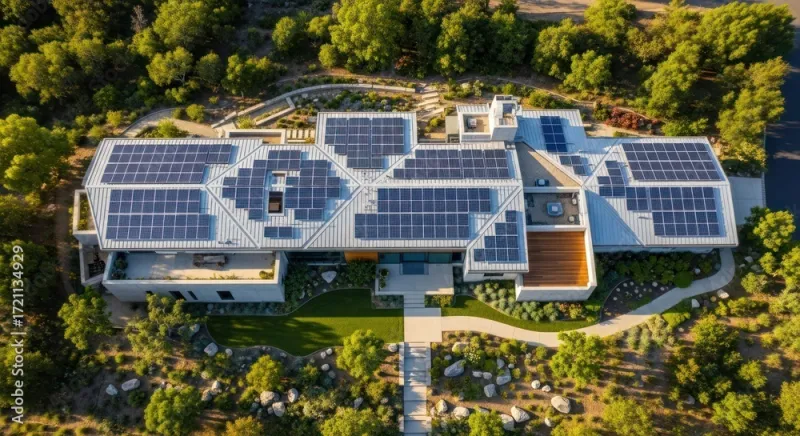
The Compound Advantage: Why Ultra-High-Net-Worth Families Are Acquiring Multiple Properties Within the Same Prestige Neighborhood

When a prominent family quietly acquires the estate next door to their primary residence, the transaction rarely makes headlines. When that same family subsequently purchases the property across the street, the pattern becomes unmistakable. This is not opportunism — it is strategy, and among ultra-high-net-worth households in America's most prestigious communities, it is becoming one of the defining real estate approaches of this decade.
The neighborhood portfolio strategy — the deliberate accumulation of multiple properties within a single elite enclave — represents a meaningful departure from conventional real estate investment thinking. Where traditional portfolio construction emphasizes geographic diversification, this approach concentrates capital within a single, highly specific location. The rationale, when examined carefully, is both financially compelling and profoundly personal.
Privacy as the Scarcest Commodity in Prestige Real Estate
Among the ultra-wealthy, privacy has supplanted almost every other residential amenity as the defining measure of luxury. Square footage, architectural pedigree, and interior finishes — while essential — are ultimately replicable. The ability to control one's immediate environment, to determine who lives adjacent to one's property, and to move freely within one's own neighborhood without scrutiny is not.
The acquisition of neighboring or nearby properties within an established community addresses this need directly. When a family owns the estate to the north and the parcel to the east, the buffer between their private life and the broader world expands considerably. Landscaping decisions, construction activity, and the identity of immediate neighbors all come under the family's influence rather than chance.
In communities where lot sizes already provide meaningful separation — a characteristic of America's most exclusive enclaves, where single-family parcels routinely exceed one acre — the addition of adjacent properties creates a private campus of a scale that is genuinely rare. This is not merely a lifestyle preference. In markets where land is finite and community access is restricted, such configurations command substantial premiums that compound over time.
Multigenerational Architecture Without Compromise
The multigenerational household is experiencing a renaissance among affluent American families, driven by a combination of cultural preference, demographic reality, and a heightened appreciation for family proximity following the disruptions of recent years. Yet the conventional solution — constructing a guest suite or secondary structure within a single property — often requires difficult compromises between privacy and proximity.
The neighborhood portfolio strategy resolves this tension elegantly. When adult children, aging parents, or extended family occupy separate properties within the same community, each household retains genuine independence — its own entrance, its own staff, its own daily rhythms — while remaining within walking distance of one another. Family gatherings require no travel. Daily connection is frictionless. Yet the boundaries that sustain healthy multigenerational relationships remain intact.
In practice, this often means acquiring a primary estate alongside a secondary property suitable for a live-in household manager, a guest residence for extended family visits, or a dedicated entertainment property — a home whose primary function is hosting rather than residence, equipped accordingly with professional catering infrastructure, expansive entertaining terraces, and guest accommodations of a caliber that no hotel could replicate.
The Financial Architecture of Concentrated Neighborhood Investment
Beyond its lifestyle dimensions, the neighborhood portfolio strategy carries a financial logic that warrants careful consideration. In America's most established prestige communities, property values are supported by a combination of factors that tend to reinforce one another over time: restricted supply, consistent demand from a narrow and highly qualified buyer pool, strong local governance, and a community identity that is self-perpetuating.
Concentrating investment within such a market means that each additional acquisition benefits from the same underlying value drivers as the first. When the community appreciates — as premier enclaves historically have, even through broader market cycles — every property in the portfolio participates in that appreciation. The family's aggregate real estate equity grows in concert, rather than being diluted across markets with varying performance characteristics.
There are also less obvious financial advantages. Properties held within the same community may be managed by a single estate management team, reducing the per-property overhead associated with staffing, maintenance, and administration. Landscaping, security, and mechanical systems can sometimes be integrated across properties, further reducing operational costs.
Tax Considerations and Planning Implications
The tax dimensions of this strategy merit thoughtful engagement with qualified advisors, as they are both significant and highly individualized. Several considerations are particularly relevant for families pursuing this approach.
Properties held as primary residences carry different tax treatment than investment properties or secondary homes under current federal and state law. The classification of each property in a neighborhood portfolio — and the allocation of time spent at each — has meaningful implications for capital gains treatment upon eventual sale, as well as for estate planning purposes. Families with substantial real estate holdings frequently work with estate attorneys to structure ownership across trusts or family entities in ways that facilitate intergenerational transfer while minimizing tax exposure.
In certain jurisdictions, the aggregation of contiguous parcels may also trigger reassessment under local property tax rules, particularly if improvements are made that connect the properties physically. Engaging local tax counsel early in the acquisition process is advisable, as the specific rules vary considerably across states and municipalities.
It is also worth noting that in communities governed by homeowners associations, the acquisition of multiple properties may carry implications for voting rights, dues obligations, and permissible modifications — all of which should be reviewed prior to completing any transaction.
Community Integration and the Long-Term Perspective
One dimension of this strategy that is sometimes underappreciated is its effect on a family's relationship with the broader community. Families who hold multiple properties within a single neighborhood become, by definition, among its most significant stakeholders. This position carries both influence and responsibility.
In the most cohesive elite communities, long-term, multi-property families are often among the most active participants in community governance, philanthropic initiatives, and the informal social structures that give a neighborhood its character. Their investment in the community's quality — not merely its property values — tends to be genuine, because their own stake is so substantial.
This orientation distinguishes the neighborhood portfolio strategy from transactional real estate investment. The families pursuing this approach are not optimizing for a single exit. They are building something more durable: a legacy presence within a community that will serve multiple generations, appreciate across decades, and provide a foundation for family life that no single property, however exceptional, could accomplish alone.
Identifying the Right Community for a Neighborhood Portfolio
Not every prestige community is equally suited to this strategy. The ideal candidate is one characterized by restricted inventory — where additional development is limited by zoning, geography, or community covenant — combined with consistent, qualified demand and a demonstrated history of value resilience across market cycles.
The community's social fabric matters as well. A neighborhood where multi-property families are welcomed and integrated into community life is a fundamentally different proposition from one where concentrated ownership is viewed with suspicion or actively discouraged.
At Belle Hills, the characteristics that define the most compelling neighborhood portfolio opportunities are well understood. Communities where architectural standards are consistently upheld, where land is genuinely finite, and where the resident population shares a long-term orientation toward the neighborhood's quality and identity represent the foundation upon which this strategy, at its best, is built.