One Estate, Many Lives: Designing Multigenerational Luxury Properties for Legacy and Lasting Harmony

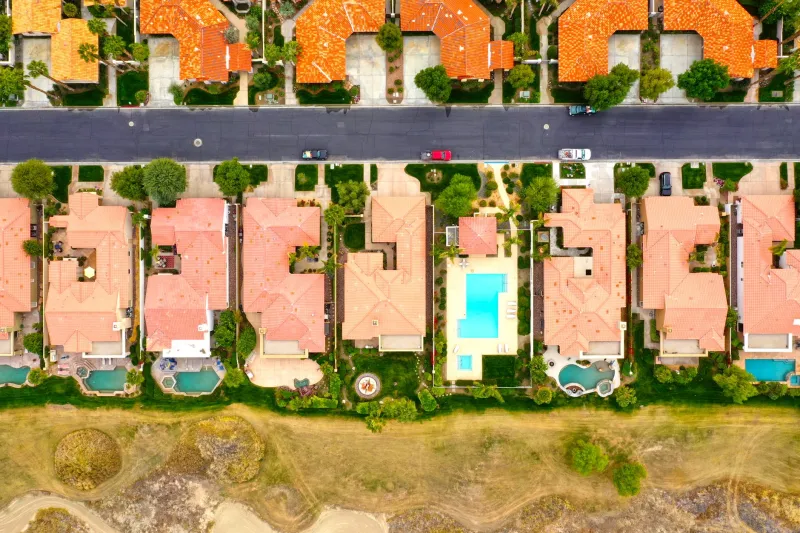
Photo: KosherTrails, CC BY-SA 4.0, via Wikimedia Commons
The family estate has always carried a particular weight in the American imagination — something between a home and an institution, a place where individual lives intersect with a larger, continuing story. But for today's ultra-high-net-worth families, the concept of the multigenerational property has shed its nostalgic associations and acquired a new kind of strategic clarity. These are not simply large homes that happen to accommodate extended families. They are deliberately engineered environments, designed from the ground up — or thoughtfully reimagined from existing structures — to serve as both functional residences and durable wealth-preservation vehicles.
The demand for such properties has grown substantially over the past several years, driven by a convergence of factors: extended life expectancy, the accelerating intergenerational transfer of wealth currently underway in the United States, and a post-pandemic reassessment of what proximity to family genuinely means for quality of life. Families that once maintained separate primary residences across multiple states are increasingly consolidating around a single flagship property, supplemented by secondary homes as circumstances require.
The Architecture of Autonomy
The central design challenge of the multigenerational estate is deceptively simple to articulate and genuinely difficult to resolve: how does one create a home that is deeply connected and yet permits each generation — and each household unit within a generation — to live with full autonomy and privacy?
The most successful solutions begin with a rigorous analysis of how each family cohort actually lives, rather than how designers imagine they might. A grandparent couple in their seventies has fundamentally different spatial needs, accessibility requirements, and daily rhythms than an adult child couple with young children, who in turn live differently from a single adult sibling. Designing for these realities, rather than for an idealized version of multigenerational domesticity, is what separates estates that function harmoniously from those that generate friction.
In practical architectural terms, this analysis typically produces a campus model rather than a single unified structure. The primary residence — often the most architecturally prominent building on the property — serves as the shared heart of the estate: the site of family gatherings, formal entertaining, and the ceremonial life of the household. Surrounding it, at distances calibrated to provide genuine acoustic and visual privacy, are secondary structures housing individual family units. These may be guest cottages, carriage houses, or purpose-built companion residences, each with its own entrance, kitchen, and living spaces, connected to the main house by covered walkways, garden paths, or internal corridors depending on the climate and the family's preferences.
Shared Spaces That Earn Their Keep
The communal amenities of a multigenerational estate are where design ambition and family dynamics intersect most visibly. Shared spaces that are genuinely used — that draw family members together by offering something each individual values — are the hallmark of a well-conceived compound. Those that are designed for visual impact but fail to accommodate the actual habits of the family become expensive maintenance burdens and sources of subtle resentment.
The most successful shared amenity programs in contemporary luxury compounds tend to include a primary pool and outdoor entertaining area positioned as a natural gathering point, a fitness facility scaled and equipped to serve multiple generations simultaneously, a professional-grade kitchen in the main house capable of producing meals for the full family on occasion, and — increasingly — dedicated spaces for shared hobbies or pursuits that define the family's identity, whether that is a wine cellar and tasting room, a workshop, a music room, or an art studio.
Shared outdoor landscapes deserve particular attention. Estates of sufficient acreage can accommodate walking trails, sporting courts, kitchen gardens, and equestrian facilities that provide both daily enjoyment and a shared sense of stewardship — the experience of caring for something together that will outlast any individual member of the family.
Legal and Financial Architecture: Structuring the Estate for Longevity
A multigenerational estate is, at its core, a long-term family asset, and its legal and financial structuring should reflect that reality from the outset. The most thoughtful families engage estate attorneys, family governance advisors, and tax counsel well before construction begins, rather than attempting to impose structure on a completed property after the fact.
The most common vehicle for holding a significant family compound is a family limited partnership or a limited liability company, which provides both liability protection and a framework for establishing ownership percentages, governance protocols, and transfer mechanisms. Properly structured, these entities allow the property to pass between generations with meaningful estate tax efficiency — a consideration of increasing urgency given the current legislative environment surrounding the federal estate tax exemption.
Beyond the legal entity itself, many families find it valuable to develop a family charter or property agreement that addresses questions of use, maintenance cost allocation, decision-making authority, and the protocols governing what happens when a family member wishes to exit their ownership interest. These conversations are most productively had before they are urgent, when goodwill and common purpose are at their highest.
Design Cohesion Across Generations
One of the more nuanced challenges facing multigenerational estate design is maintaining architectural and aesthetic coherence across structures that may be built or renovated at different times and to different occupants' tastes. A compound where the main house reflects one generation's aesthetic sensibility and the secondary residences reflect entirely different ones can feel disjointed — a collection of disparate buildings rather than a unified estate.
The most elegant solution is to establish a clear architectural language at the outset — a palette of materials, a set of proportional relationships, a vocabulary of details — that can be applied consistently across all structures while still permitting individual expression within each unit. This might mean that every building on the property uses the same exterior cladding material but allows interior finishes to vary substantially. Or it might involve a consistent roofline profile and fenestration rhythm that unifies the campus visually from a distance, even as the buildings serve very different functions.
Engaging a single architect or design firm to oversee the compound as a whole — even if individual structures are completed years apart — is one of the most effective ways to preserve this coherence over time.
The Estate as Enduring Legacy
Ultimately, the multigenerational estate represents a particular kind of ambition: the desire to create something that will outlast its creators and continue to serve the family across decades and, for the most intentional families, across centuries. The properties that achieve this are not simply large or expensive. They are thoughtfully conceived, carefully governed, and deeply connected to the values and identity of the families they shelter.
At Belle Hills, we regard these properties as among the most significant residential undertakings in the luxury market — not because of their scale or their price, but because of what they represent: a commitment to continuity, to shared life, and to the proposition that a home, designed with sufficient wisdom and care, can be among the most meaningful legacies one generation leaves to the next.