Rooms That Remember: The Rise of the Dedicated Legacy Library in America's Finest Private Residences
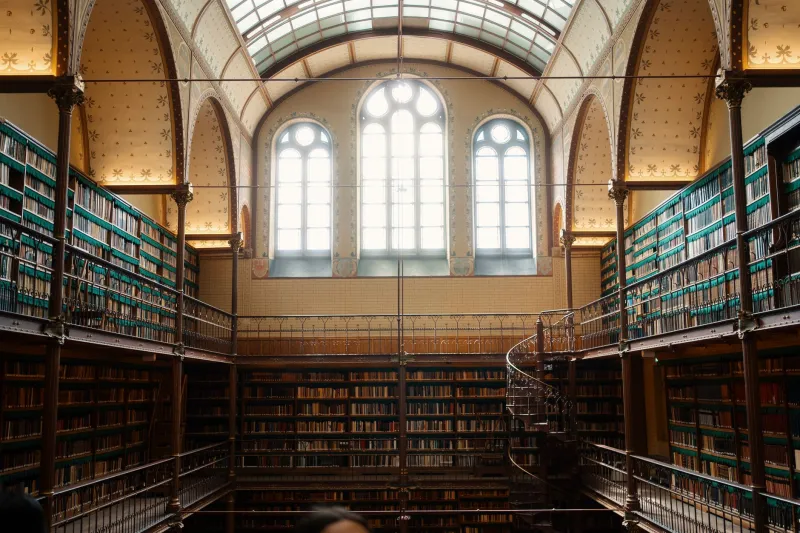
Every great family accumulates more than wealth. It accumulates story—the documents and photographs, the correspondence and commissions, the objects that carry meaning precisely because of who held them and when. For generations, these artifacts resided in banker's boxes, climate-controlled storage units, or the back rooms of estate attorneys' offices, organized by practicality rather than reverence. Today, a growing number of America's most accomplished families are choosing a different approach: commissioning dedicated rooms within their private residences that honor, preserve, and actively celebrate the legacy they have built.
These spaces—variously called heritage rooms, legacy libraries, or family archives—represent one of the most distinctive and personally resonant trends in high-end residential design. They are not trophy rooms in the traditional sense, though they may contain objects of extraordinary value. They are not simply libraries, though books and documents often anchor them. They are something more considered: living monuments to family achievement, cultural stewardship, and the deliberate act of connecting past to future.
The Impulse Behind the Archive
To understand why ultra-affluent families are investing in dedicated heritage spaces, it is useful to consider the particular anxieties and aspirations that accompany significant multigenerational wealth.
Families who have built or preserved substantial estates are acutely aware of the fragility of memory. Photographs fade, documents deteriorate, and the contextual knowledge that gives objects their meaning—who acquired this painting, under what circumstances, and why it mattered—dies with the generation that held it. The loss is not merely sentimental. For families whose collections include works of significant art provenance, historical correspondence, or artifacts tied to American business or cultural history, the failure to document and preserve is also a failure of stewardship.
At the same time, there is a growing recognition among high-net-worth families that legacy is not transmitted automatically. It must be curated, organized, and made accessible in a form that future generations will actually engage with. A legacy library accomplishes this by creating a physical environment that invites engagement—a room that communicates, through its very design, that the history it contains is worthy of serious attention.
The Technology of Preservation
The most sophisticated heritage rooms currently being commissioned in private residences would not be out of place in a small regional museum. The preservation technology employed reflects both the value of the materials being protected and the long time horizons these families are planning for.
Climate control in a dedicated archive room operates at a level of precision far beyond standard residential HVAC. Temperature and relative humidity are maintained within narrow bands specifically calibrated for the materials in question—paper documents, photographic prints, film, textiles, and works on canvas each have distinct environmental requirements that a well-designed system addresses individually. UV-filtering glazing on windows and display cases protects light-sensitive materials from the cumulative damage of even indirect sun exposure.
Digital archiving has become an essential complement to physical preservation. High-resolution scanning of documents and photographs, combined with structured metadata and redundant off-site digital storage, creates a permanent record that can survive any physical loss. Some families are commissioning professional oral history projects alongside their physical archives—recorded interviews with living family members conducted by professional historians, preserved in formats designed for long-term accessibility.
Art provenance documentation, increasingly important in a market where the history of a work's ownership carries both legal and financial significance, receives particular attention. Dedicated storage for certificates of authenticity, exhibition records, conservation reports, and acquisition correspondence ensures that the paper trail accompanying a collection remains as carefully maintained as the works themselves.
Design as Storytelling
A legacy library earns its place among the great rooms of a residence not through technology alone, but through design that transforms archival function into emotional experience. The finest examples commission interior designers and architects who understand that these spaces must work simultaneously as preservation environments and as rooms that invite reflection, conversation, and a genuine sense of connection to the past.
Custom millwork plays a central role. Built-in shelving systems designed to accommodate archival boxes, oversize volumes, and framed documents alongside display niches for three-dimensional objects create an environment that feels both purposeful and inviting. Materials are chosen for their longevity and their resonance: aged brass hardware, hand-stitched leather panels, reclaimed wood from a family property, stone sourced from a region of personal significance.
Lighting design in a heritage room requires particular care. Display lighting that illuminates objects beautifully while minimizing UV and heat exposure demands a level of specification more commonly found in gallery installation than residential design. Adjustable track systems, fiber optic display lighting, and carefully positioned accent fixtures allow the room to function equally well as an intimate viewing environment and a space for family gatherings organized around shared history.
Some of the most thoughtful commissions incorporate interactive elements: touchscreen displays embedded in custom cabinetry that allow visitors to navigate digitized family archives, curated timelines that place family history within broader American historical context, or dedicated presentation areas where a family historian or archivist can conduct guided explorations of the collection with younger family members.
The Room as Inheritance
There is a practical dimension to the legacy library that extends beyond sentiment and into the realm of estate planning and wealth transfer. Families with significant art collections face substantial administrative complexity: insurance documentation, conservation records, attribution research, and the legal instruments governing how works are to be treated across generations. A dedicated room that centralizes this documentation—and that makes it accessible to the attorneys, appraisers, and conservators who will eventually need it—represents a meaningful contribution to the orderly transmission of an estate.
Beyond the practical, however, the legacy library speaks to something more fundamental about what it means to build a home that endures. The great private libraries and archives of American history—from the Morgan Library in New York to the Huntington in San Marino, California—began as personal collections assembled by individuals who understood that the accumulation of knowledge and documentation was itself an act of cultural significance. The families commissioning heritage rooms today are operating in this same tradition, at a scale calibrated to the private residence rather than the public institution.
A Room Worth Building
For families considering the construction or renovation of a prestige property, the legacy library represents one of the most personally meaningful investments available within the residential program. Unlike amenities that serve the immediate comfort of current occupants, a well-designed heritage room is built explicitly for the future—for the grandchildren who will one day stand in it, turn the pages of a great-grandmother's correspondence, and understand, perhaps for the first time, the full dimensions of what their family has done and who they have been.
At Belle Hills, we believe that the most extraordinary homes are those designed with precisely this kind of temporal ambition—properties that are not merely places to live, but places that live on.