The Private Table: How the World's Most Extraordinary Homes Are Elevating Culinary Spaces Into Fine-Dining Destinations
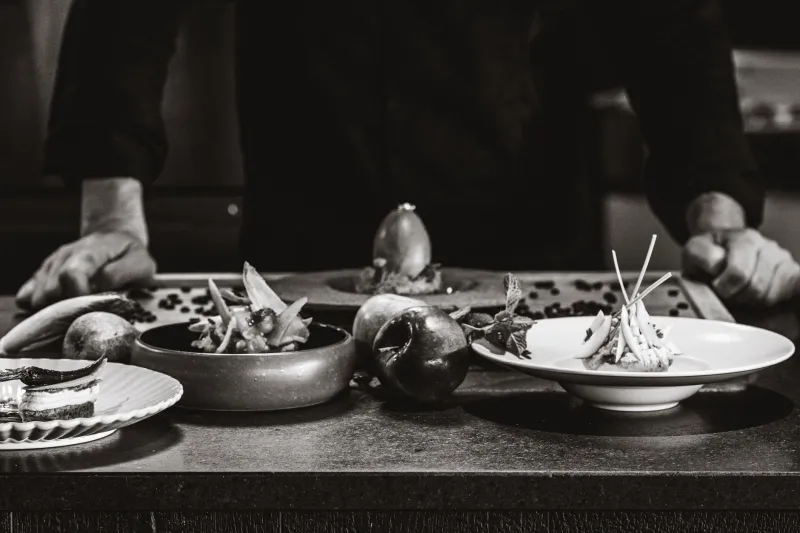
Consider the experience of dining at one of America's most celebrated restaurants. The precision of the service. The architecture of the meal. The sense that every detail — from the temperature of the room to the weight of the silverware — has been considered in relation to the whole. Now imagine that experience unfolding not in a public dining room but within the privacy of your own residence, at a table set exclusively for your guests, prepared by a chef whose singular focus is your household.
This is not a fantasy reserved for the fringes of the ultra-wealthy. It is a standard that a growing number of affluent American homeowners are actively designing their properties to meet. And the spaces being created to support it represent some of the most sophisticated residential architecture being produced in the country today.
Beyond the Gourmet Kitchen
The gourmet kitchen has been a fixture of luxury residential design for decades. Sub-Zero refrigeration, Wolf ranges, Miele dishwashers — these have become the standard vocabulary of high-end residential construction, present in virtually every property above a certain price point. Their ubiquity has, in a sense, neutralized their distinction. When every home in a prestige community features a professional-grade range, the range itself ceases to confer differentiation.
What separates the residences now setting the pace in culinary design is not the quality of individual appliances — though those remain exceptional — but the totality of the culinary environment. These homes are designed around a philosophy of hospitality that treats food preparation, presentation, and service as a unified experience deserving of dedicated, purpose-built space.
This philosophy typically manifests in two distinct but complementary areas: the professional kitchen, designed for the chef's work, and the experiential kitchen or culinary salon, designed for the guests' engagement. In the most thoughtfully conceived estates, these spaces are adjacent but functionally separate — allowing the full theater of haute cuisine to unfold without exposing guests to the organized intensity of professional food preparation.
The Chef's Domain: Designing for Professional Performance
A private chef suite designed to accommodate serious culinary work bears little resemblance to even the most generously appointed residential kitchen. Its requirements are defined not by aesthetic convention but by the demands of professional cooking at the highest level.
Commercial-grade ventilation systems capable of managing the heat and combustion byproducts of intense cooking are essential — and in residential applications, must be engineered to function without the noise levels acceptable in a restaurant environment. Walk-in refrigeration and separate dry storage areas are standard. Multiple cooking stations, each dedicated to a specific technique — induction, gas, open flame, and in increasingly common configurations, wood-fire or custom hearth cooking — allow a chef to manage complex multi-course menus without the spatial compromises inherent in a conventional kitchen layout.
Butler's pantries, staging areas, and dedicated plating stations complete the professional infrastructure. These spaces, often invisible to guests, are where the discipline of fine dining is actually practiced. Their design is a function of workflow, ergonomics, and the specific culinary style of the resident chef — which is why the most sophisticated homeowners engage their private chefs directly in the kitchen design process, treating their professional requirements with the same seriousness they would apply to any expert consultant.
The Culinary Salon: Where Architecture and Gastronomy Converge
If the chef's kitchen is the backstage of the residential dining experience, the culinary salon is its stage. This is the space in which guests gather, where the boundaries between cooking and conversation dissolve, and where the home's hospitality reaches its fullest expression.
The design of these spaces draws from multiple traditions — the open kitchen of the contemporary restaurant, the intimacy of the private dining room, and the social warmth of the great residential kitchen of an earlier era. A large, beautifully appointed island serves simultaneously as a preparation surface, a service station, and a gathering point. Seating is arranged to invite participation without requiring it. Lighting is layered to flatter both food and faces. Materials — natural stone, aged wood, hand-formed plaster — are chosen for their warmth and their ability to improve with use.
In the most ambitious installations, the culinary salon incorporates a chef's counter: a dedicated seating area, typically accommodating four to eight guests, positioned to provide an unobstructed view of the cooking process. The experience is deliberately analogous to an omakase counter or the chef's table at a fine restaurant — intimate, interactive, and wholly focused on the meal being prepared. The difference, of course, is that the menu, the company, and the setting are entirely the homeowner's own.
The Wine Library: A Room With Its Own Architecture
No culinary environment of genuine distinction is complete without a considered approach to wine storage and presentation. In the most exceptional residential properties, this consideration has given rise to the wine library — a space that functions simultaneously as a climate-controlled cellar, a display environment, and an intimate gathering room.
The wine library as an architectural proposition has evolved considerably from the traditional residential wine cellar. Where the latter was typically utilitarian — a temperature-controlled room in the basement, organized for storage rather than experience — the contemporary wine library is conceived as a destination within the home. Custom racking in wood, steel, or glass creates a visual environment of considerable beauty. Tasting tables, seating areas, and carefully designed lighting allow the space to function as a venue for private tastings, intimate dinners, or simply the contemplative pleasure of being surrounded by an exceptional collection.
Climate control in these environments is managed with extraordinary precision. Separate temperature and humidity zones for different varietals, vibration-dampening systems to protect long-aging bottles, and UV-filtered glass throughout are standard specifications for collections of significant value. In several notable estates, the wine library occupies a position of architectural prominence — adjacent to the dining room, visible through glass walls from principal living areas — reflecting the homeowner's view that a serious wine collection is as much an aesthetic asset as a functional one.
The Private Chef as Residential Collaborator
The rise of the private chef suite as a residential amenity category cannot be separated from the broader phenomenon of the full-time private chef as a household fixture among America's most affluent families. For these households, the chef is not an occasional luxury — they are a permanent member of the household staff whose professional requirements shape the home's design in fundamental ways.
This relationship between homeowner and chef has produced some of the most interesting residential culinary spaces in recent memory. Chefs with backgrounds in specific culinary traditions bring precise spatial requirements: the Japanese-trained chef who requires a dedicated sushi preparation area; the French-trained chef whose approach to sauce work demands a specific configuration of burners and reduction equipment; the pastry specialist whose work requires a marble-topped station maintained at a temperature distinct from the rest of the kitchen.
The most thoughtful residential culinary designs accommodate these individual requirements not as afterthoughts but as organizing principles — designing the space around the chef's practice rather than retrofitting a generic kitchen to suit a specific approach.
Entertaining at the Highest Level
Ultimately, the investment in exceptional culinary infrastructure is an investment in a particular quality of hospitality — one that is, by its nature, deeply personal and entirely irreproducible. The private dinner prepared in a world-class home kitchen by a dedicated chef, served in a beautifully designed dining room, accompanied by wines drawn from a thoughtfully assembled cellar, is an experience that no restaurant, however celebrated, can replicate. It belongs entirely to the host and to the guests they choose to invite.
At Belle Hills, we recognize that this quality of hospitality is among the most meaningful expressions of the elevated life that exceptional residential design makes possible. The private table, set with care and intention in a home built to receive it, remains one of the most enduring pleasures of living exceptionally well.