Prestige Without Walls: How Elite Communities Are Redefining Access and Exclusivity
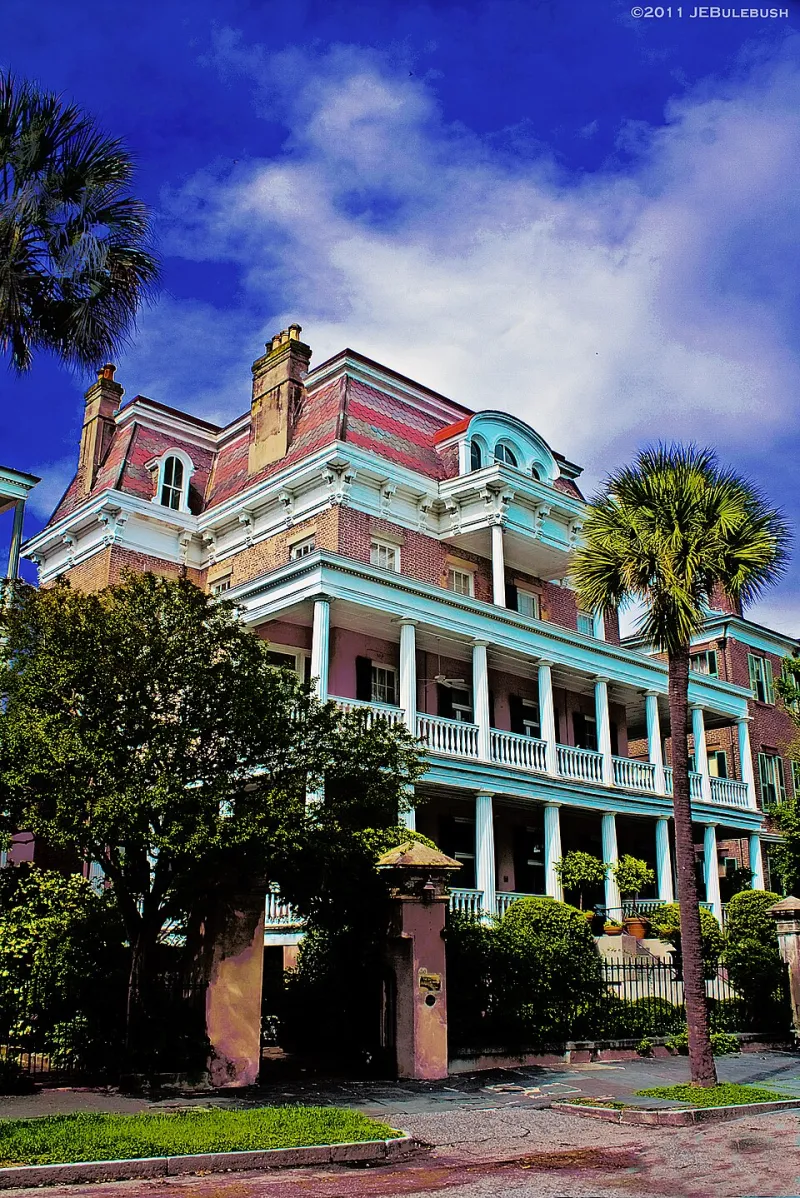
Photo: jebule41, CC BY 2.0, via Wikimedia Commons
There is a particular irony embedded in the conventional model of gated luxury living. In the pursuit of privacy, many of America's most exclusive communities have inadvertently constructed a kind of gilded isolation — places of considerable beauty that are, in practice, cut off from the cultural energy, culinary vitality, and social richness that make urban and suburban life genuinely rewarding. The most thoughtful developers and community planners are now asking a more nuanced question: how does a prestige neighborhood offer true distinction without becoming a fortress?
The answer, it turns out, is neither a gate nor the absence of one. It is something considerably more sophisticated.
The Limitations of the Perimeter Model
The gated community, as an American institution, has its roots in a straightforward proposition: physical barriers create security, and security enables peace of mind. For several decades, this logic held considerable sway among affluent buyers, and communities from Palm Beach to Bel Air to the North Shore of Chicago built their identities around controlled access points, uniformed personnel, and perimeter walls that announced, unmistakably, that entry was a privilege.
Yet the most discerning buyers of the current era — many of whom have lived internationally, traveled extensively, and experienced the vitality of London's Kensington, Manhattan's Upper East Side, or San Francisco's Pacific Heights — have begun to chafe against the limitations of the perimeter model. A home that requires a ten-minute drive to reach a worthy restaurant, a world-class gallery, or a thoughtfully curated market is, in a meaningful sense, an inconvenient home, regardless of how exceptional the property itself may be.
Privacy, these buyers have concluded, is not synonymous with remoteness. And exclusivity is not synonymous with inaccessibility.
Selective Permeability: The New Design Philosophy
What has emerged in response is a design philosophy that might be described as selective permeability — the deliberate engineering of a community that controls the terms of its accessibility rather than simply restricting it. In practice, this philosophy manifests across several interconnected dimensions.
At the neighborhood planning level, selective permeability often takes the form of what urban designers call the "permeable edge" — a community boundary that is visible and meaningful without being impenetrable. Landscaped berms, architectural grade changes, and carefully positioned green corridors can define a neighborhood's identity with considerable elegance while allowing residents to move fluidly between their private enclave and the broader community fabric.
Some of the most compelling examples of this approach can be found in the planned luxury communities taking shape in the Nashville metropolitan area, the Research Triangle of North Carolina, and select master-planned developments in suburban Denver. These communities are being designed from the ground up with walkable or short-drive access to curated retail and dining districts — not big-box commercial corridors, but carefully selected boutique environments that reflect the aesthetic sensibilities of their residents.
Smart Privacy Technologies and the Architecture of Discretion
At the individual property level, the tools available to achieve genuine privacy have grown remarkably sophisticated, and the most forward-thinking luxury homes are deploying them with considerable artistry.
Perimeter security systems have evolved well beyond the motion-sensor floodlight. Contemporary estate security integrates millimeter-wave perimeter detection, AI-driven camera systems capable of distinguishing between a delivery vehicle and an unauthorized presence, and biometric access controls that eliminate the vulnerabilities associated with traditional keys and codes. These systems operate invisibly, embedded within the architecture and landscape rather than imposed upon them.
Acoustic engineering represents another frontier in the architecture of discretion. High-performance windows with laminated glazing, mechanically isolated flooring systems, and strategic landscaping with mature evergreen plantings can render a property acoustically private even when situated in relative proximity to neighbors or thoroughfares. The result is an interior environment of extraordinary calm — a quality that buyers who have lived in dense urban environments tend to value with particular intensity.
Lighting design, too, plays a subtle but powerful role. Automated exterior lighting systems that respond to presence rather than operating on fixed schedules, combined with carefully angled fixtures that illuminate without broadcasting, allow a property to feel secure without feeling surveilled.
Connectivity as a Prestige Amenity
Perhaps the most significant reframe in this evolving conversation is the repositioning of connectivity itself — not merely digital connectivity, but cultural, culinary, and social connectivity — as a prestige amenity rather than a compromise.
The communities that are attracting the most sophisticated buyers today are those that can make a credible claim to both privacy and proximity. Proximity to a Michelin-recognized dining scene. Proximity to a performing arts institution of national standing. Proximity to private aviation facilities. Proximity to the kind of independent retail environment — the artisan bookshop, the curated wine merchant, the bespoke tailor — that signals a community's cultural confidence.
In metropolitan areas such as Washington, D.C., Atlanta, and the greater Boston region, certain neighborhoods have achieved precisely this balance, offering estate-scale properties with genuine seclusion while remaining within fifteen to twenty minutes of world-class cultural and commercial amenities. These communities are commanding a measurable premium over comparably appointed properties that offer privacy at the cost of vibrancy.
The Social Architecture of Belonging
There is a dimension of this conversation that extends beyond physical design and technology into the realm of social architecture — the deliberate cultivation of community identity and belonging. The most exclusive neighborhoods have always understood that their value is not merely the sum of their individual properties but the character of the community those properties collectively constitute.
The communities that are navigating the access-exclusivity balance most successfully tend to share a common characteristic: they invest meaningfully in shared experiences that are available to residents and, selectively, to invited guests. Private dining clubs, resident-only cultural programming, curated lecture series, and members-only wellness facilities create a layered sense of belonging that gates and walls cannot manufacture.
This social infrastructure also serves a practical function: it creates natural, organic opportunities for residents to connect with one another on terms of genuine mutual interest, rather than the enforced proximity that characterizes less thoughtfully designed communities.
What the Discerning Buyer Should Seek
For the buyer evaluating communities through this lens, the questions worth asking are both practical and philosophical. Does this neighborhood offer meaningful privacy without meaningful isolation? Does its design philosophy reflect a genuine understanding of how sophisticated people actually wish to live — not in retreat from the world, but in selective, curated engagement with it?
At Belle Hills, we believe that the finest communities answer these questions affirmatively, not through marketing language, but through the evidence of their design, their amenities, and the character of the lives their residents lead. Prestige, properly understood, has never been about exclusion for its own sake. It has always been about the quality of what is included.