The Discipline of Enough: Why Right-Sizing Became the New Measure of Luxury

Photo by Photo by Zac Gudakov on Unsplash on Unsplash
For much of the past two decades, American luxury real estate treated scale as a proxy for status. The largest house on the street, the longest driveway, the most acres, the most rooms: these were the visible signals of arrival. In 2026, that equation is being revised. A growing number of affluent buyers are choosing smaller, better-resolved homes—properties with stronger materials, greater privacy, more flexible spaces, and a maintenance burden that does not consume the life the house was meant to support.
This is not a retreat from luxury. It is a recalibration of it.
The End of the Square-Footage Arms Race
The case for more house was always partly practical. Families needed room for children, guests, staff, and hobbies. But in many prestige markets, the practical need peaked long before the square footage did. Formal living rooms went unused. Guest suites sat empty for most of the year. Vast basements became storage for furniture that no one intended to use. The cost of heating, cooling, cleaning, insuring, and maintaining those spaces continued regardless.
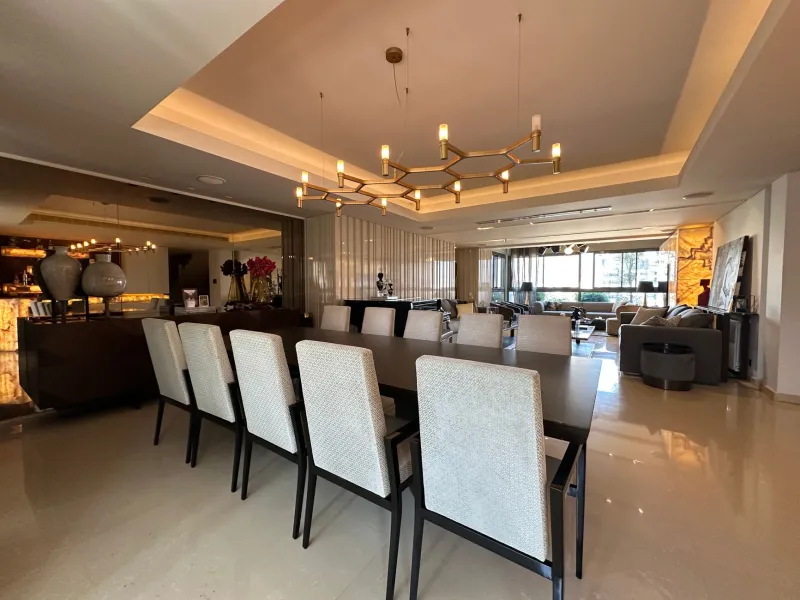
At the same time, the definition of a well-lived home has shifted. Affluent buyers increasingly value time, privacy, and quality of experience over the simple arithmetic of rooms. A smaller house with excellent acoustics, abundant natural light, a beautiful kitchen, and a seamless connection to the landscape can feel more luxurious than a sprawling one that requires constant attention. The pandemic years accelerated this awareness; the years since have hardened it into a preference.
What Right-Sizing Is—and Is Not
Right-sizing is not a euphemism for downsizing. Downsizing often implies a reduction driven by necessity, age, or budget. Right-sizing is intentional. It asks what the household actually uses, what it values, and what it is willing to maintain. The result may be a smaller house, but it may also be a differently organized one: fewer bedrooms, more generous common areas, a dedicated studio, a private guest wing, or a garage that doubles as a workshop.
The distinction matters because right-sizing is not about doing without. It is about spending where the return is felt daily. A buyer might trade a third guest suite for a better primary bath, or a formal dining room for a chef’s kitchen that opens to a garden. The total square footage may fall, but the quality of the spaces that remain rises.
The Financial Logic of Fewer, Better Rooms
The financial argument is straightforward. Large homes carry large fixed costs: utilities, insurance, property taxes in many jurisdictions, maintenance, and staffing. In markets where prices are driven by land value rather than building size, a smaller house on a superior lot can offer better privacy and a stronger long-term position than a larger house on a busier road. Renovation and replacement costs also favor restraint. A tight, well-built envelope with high-performance systems can be cheaper to operate and easier to maintain than a sprawling one with complex rooflines and multiple mechanical zones.
There is also a resale dimension. Well-designed smaller homes appeal to buyers who want quality without a second job managing the property. That pool is not unlimited, but it is growing—particularly among professionals, entrepreneurs, and older buyers who have already owned the trophy house and found it wanting.
Privacy, Materials, and Flexible Space
Right-sizing tends to concentrate investment in things that cannot be easily added later: land, privacy, architecture, materials, and systems. A smaller house can afford better windows, thicker walls, finer millwork, and more thoughtful lighting. It can sit more gently on the site, preserving trees and views that a larger footprint would compromise.
Flexibility is the other key. A room that serves as a study, a guest room, and a quiet retreat is more valuable than three rooms that each serve one purpose and sit empty. Buyers are asking for spaces that can adapt without renovation—movable walls, generous storage, and infrastructure that supports changing use over time.
A Different Kind of Statement
Prestige has not disappeared; it has become more legible to those who know what to look for. The new statement is not the size of the house but the intelligence of its design. It is a property that feels calm rather than crowded, private rather than performative, and expensive in the details rather than in the volume. That shift is visible in the language of the market as well: listings emphasize provenance, craftsmanship, and setting more than room counts.
For sellers, this has implications. A large house with dated systems and underused spaces may struggle against a smaller house with a coherent design and a strong sense of place. For buyers, it means the question is no longer whether the property is big enough, but whether it is right enough.
The Next Chapter of Prestige
The case for the smaller estate is ultimately a case for discipline. It asks owners to distinguish between what impresses and what sustains. It accepts that luxury is not the absence of constraint but the thoughtful use of it. In 2026, that discipline is becoming a marker of sophistication in its own right.
The most exceptional homes have always been those that fit their owners rather than overwhelm them. Right-sizing simply makes that principle explicit. For affluent buyers, the reward is a home that asks less of them—and gives more in return.