When Architecture Becomes a Legacy: The Rise of the Trophy Home as a Collectible Investment
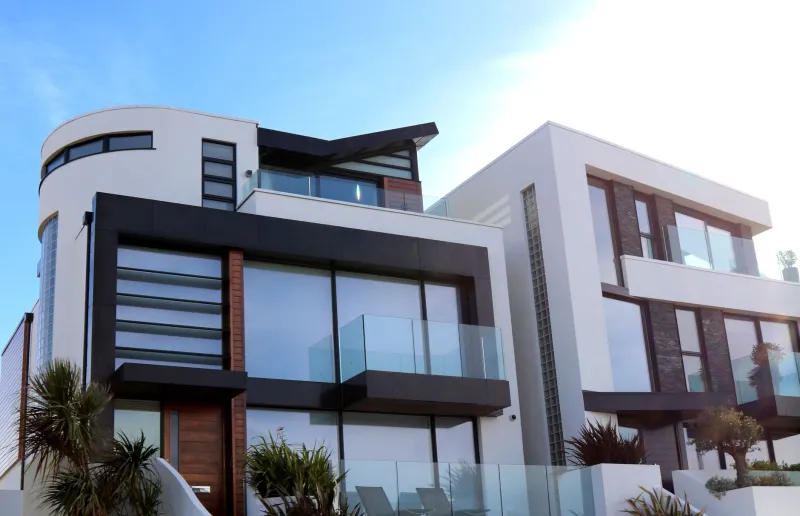
For generations, the most discerning American buyers have treated real estate as a cornerstone of personal wealth. Yet a quiet but consequential shift is underway in the uppermost tier of the luxury market. Increasingly, ultra-high-net-worth individuals are approaching residential acquisition the way a serious collector approaches a Basquiat or a Giacometti — with an eye not merely toward comfort or status, but toward enduring cultural and financial value.
The architecturally significant home has become, in the truest sense, a collectible asset.
The Convergence of Art and Real Estate
The parallel between fine art collecting and architectural trophy properties is no longer metaphorical — it is measurable. A 2023 analysis by Savills Research found that properties designed by globally recognized architects appreciated at a rate roughly 30 percent higher than comparable luxury homes in the same markets over a ten-year period. The reasons are intuitive: scarcity, provenance, and cultural cachet are as meaningful in residential design as they are on the auction floor at Christie's.
Consider the trajectory of homes associated with architects such as Frank Gehry, Tadao Ando, and the late Zaha Hadid. When Ando's private residence commission for a client in Malibu resold several years after its initial purchase, it commanded a price that reflected not square footage or land value alone, but the singular identity of the structure itself. The home had become, effectively, a signed work.
"There is an unmistakable collector's mentality emerging among our most sophisticated clients," notes one principal at a leading Los Angeles architecture firm who has collaborated on multiple trophy commissions. "They want to know: who designed this, what is the provenance, and can it ever truly be replicated? If the answer to that last question is no, the conversation becomes very different."
What Distinguishes an Architectural Asset from a Luxury Home
Not every expansive residence with imported marble and a climate-controlled wine cellar qualifies as an architectural collectible. The distinction lies in several defining characteristics that luxury buyers and their advisors are learning to evaluate with increasing rigor.
Authorship and Pedigree. The identity of the architect matters enormously. Homes bearing the signature of a recognized master — whether a global icon or a critically celebrated regional voice — carry an inherent premium. Awards, museum retrospectives, and academic recognition all contribute to an architect's market standing, which in turn elevates the properties they have designed.
Material Integrity and Craft. Collectible architecture tends to favor materials chosen for longevity and meaning rather than trend. Hand-poured concrete, reclaimed old-growth timber, hand-laid stone, and bespoke metalwork are not merely aesthetic choices — they are signals of a commitment to permanence that resonates with collectors.
Conceptual Coherence. The most sought-after trophy homes embody a clear design philosophy from the foundation to the roofline. They are not assembled from disparate influences but realized as unified statements. This coherence is precisely what makes them difficult to replicate and therefore increasingly rare over time.
Site Specificity. A home designed in intimate dialogue with its landscape — its topography, its light, its relationship to water or horizon — cannot be lifted from its context. This irreducible connection to place is among the most powerful drivers of long-term value.
The Market Trends Confirming the Shift
Data from the Institute for Luxury Home Marketing consistently shows that the highest-performing properties in markets such as Aspen, Montecito, East Hampton, and Miami's Coconut Grove are disproportionately those with documented architectural distinction. In the Belle Hills communities we serve, this pattern is equally apparent: homes that have been featured in Architectural Digest, awarded by the AIA, or designed by architects with established critical reputations consistently outperform their neighbors in both time-on-market metrics and final sale price.
The secondary market for architecturally significant homes has also grown more sophisticated. Buyers increasingly conduct what might be described as due diligence that mirrors the research undertaken before acquiring a museum-quality painting — reviewing the architect's full body of work, consulting with design historians, and engaging estate specialists with expertise in the intersection of art and property.
Building a Residence Worthy of Collection
For those considering commissioning rather than acquiring an architectural trophy, the process demands a particular kind of patience and intention. The most successful collector-patrons approach the architect as a true collaborator rather than a service provider. The brief is not a checklist of amenities but a conversation about values, materials, and the quality of daily life the home should sustain.
Timelines are longer. Budgets require greater flexibility. And the willingness to surrender some degree of conventional expectation in favor of the architect's vision is often what separates a remarkable home from a truly extraordinary one.
"The clients who end up with something genuinely collectible are the ones who trust the process," reflects a prominent residential architect based in New York whose recent commissions have included properties in Connecticut's Litchfield Hills and along the coast of Maine. "They bring a point of view, but they also bring curiosity. They want to be challenged."
The Belle Hills Perspective
At Belle Hills, we have long understood that the most enduring properties in any portfolio are those that transcend market cycles because they transcend mere function. The homes that appreciate most reliably — and that carry the deepest personal significance for their owners — are those conceived as genuine works of art in which daily life unfolds.
As the definition of luxury investment continues to evolve, the architecturally significant residence stands apart: not simply as a place to live, but as a legacy to be curated, preserved, and ultimately passed forward. In that sense, the finest homes have always had something in common with the finest art. It simply took the market a little time to catch up.